


Nobody wakes up planning to lose an account. They lose it one skipped check-in, one unanswered email, and one quiet non-renewal at a time.
Most businesses can tell you exactly how much they spent to acquire their last ten customers. Far fewer can tell you which of their existing clients are quietly drifting toward the exit. That gap, between what companies track on the way in and what they ignore on the way out, is where a huge amount of preventable revenue disappears every year.
The renewal problem is not that clients leave. Clients will always leave sometimes, for reasons outside anyone's control. The problem is how many of them leave for reasons that were visible months in advance, and how rarely anyone was watching.
Let’s take a look at just some of the ways ClientPoint humanizes your digital selling environment and wins you and your team more deals. If you'd like to learn more about how ClientPoint can help you communicate to your clients and team, click here to book a demo with one of our experts.
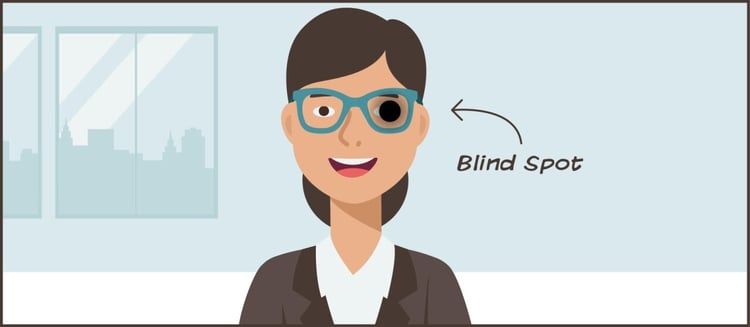
Image source: Juliet Funt via LinkedIn (https://www.linkedin.com/pulse/seven-stages-surrendering-blind-spot-juliet-funt?trk=public_post_feed-article-content)
Acquisition gets the dashboards, the budget, and the executive attention. Renewal usually gets a spreadsheet someone updates when they remember to. That imbalance is expensive, because the math on retention is not close.
| 5-25x | Acquiring a new customer typically costs five to twenty-five times more than retaining an existing one, which makes every quietly lost renewal a disproportionately expensive loss compared to a new deal of the same size. Source: industry acquisition-cost benchmarks |
| 25-95% | A five percent improvement in customer retention can increase profitability by twenty-five to ninety-five percent, since retained revenue carries almost none of the acquisition cost that new revenue does. Source: Bain & Company |
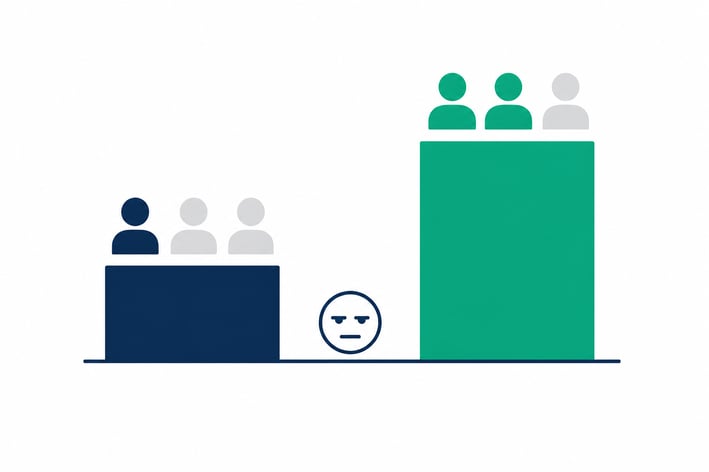
Put those two numbers together and the imbalance becomes obvious. A team can spend months and a real marketing budget chasing a new logo of a given size, while a similarly sized renewal walks out the door with nobody in the building fully aware it was at risk. The new deal gets a kickoff call. The lost renewal gets a note in a CRM field nobody reads.
This is not an argument against investing in growth. It's an argument that the return on protecting revenue you already have is usually better than the return on chasing revenue you don't have yet, and most businesses are structurally set up to notice the second and miss the first.
If you're curious what ClientPoint could do for your team, click here to claim a free demo with one of our experts.
Ask most teams why a client didn't renew and the answer is almost always "budget" or "they went with someone cheaper." It's the easiest explanation, and it's usually wrong.
| 68% | Roughly two-thirds of customers who leave a business do so because they feel it is indifferent to them, not because of what they were charged. Source: Rockefeller Corporation / Accenture Strategy |
73% |
Poor service experience is cited by a strong majority of consumers as their actual reason for switching providers, well ahead of cost. Source: Microsoft Global State of Customer Service |
Price is a convenient story because it requires no self-examination. "They found something cheaper" implies the relationship was fine right up until a competitor's quote showed up. In reality, the client had usually stopped feeling prioritized long before that quote ever arrived. The competitor didn't create the opening. They just showed up while it was already there.
| Clients rarely leave with a complaint. Most leave with a shrug, because by the time they've decided, they've already stopped expecting anything different from you. |
That distinction matters because it changes what renewal management actually has to solve for. It's not primarily a pricing problem or a competitive problem. It's an attention problem, and attention is something a business controls entirely on its own.
3. The Renewal Cliff: Where The Warning Signs Get Missed
 If you'd like to learn more about how ClientPoint can improve your meeting setup, click here to claim a free demo with one of our experts.
Every lost account has a paper trail before it has an ending. A stakeholder who used to reply within the day starts taking a week. Usage quietly drops. A champion leaves the company and nobody on the vendor side notices for two months. None of this is subtle in hindsight. It's only invisible in the moment, because most teams have no structured way of watching for it.
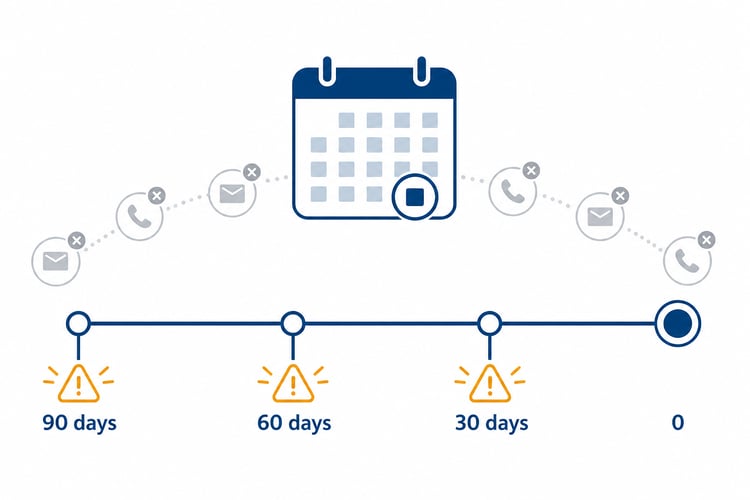
| 60-90 days | Well-built customer health scoring can flag renewal risk sixty to ninety days before the contract date, which is exactly the window in which a save is still realistic and a scramble is not yet required. Source: customer health scoring research, CDP.com |
| 26% | Companies that actively monitor churn indicators reduce customer attrition by an average of twenty-six percent within twelve months of doing so. Source: Totango Customer Success Benchmark |
The gap here is rarely a lack of information. Most businesses already have the signals: renewal dates in a contract, usage data in the product, email threads getting slower. What's missing is a system that connects those signals to a date on the calendar and puts them in front of the right person before the ninety-day window closes, not after.
Instead, what usually happens is that renewal only becomes a topic of conversation thirty days out, sometimes less, when the client success manager finally checks the contract end date. By then, the client has often already made up their mind. The conversation that follows isn't a renewal conversation. It's a rescue attempt, and rescue attempts convert far worse than planned check-ins do.
4. What Reactive Renewal Management Actually Costs You
Reactive renewal management doesn't just lose the accounts that were never going to stay. It loses accounts that would have renewed easily, if anyone had reached out with enough runway to have a real conversation instead of a defensive one.
| 85% | An estimated eighty-five percent of churn is preventable through better service and earlier intervention, meaning most lost accounts were saveable, not inevitable. Source: SuperOffice research |
| $168B | US companies lose an estimated one hundred sixty-eight billion dollars annually to preventable customer churn, revenue that a more proactive process could have retained. Source: industry churn-cost analysis |
There's also a quieter cost that doesn't show up in a churn report: the accounts that do renew, but on worse terms, because the vendor showed up late and had to negotiate from a defensive position instead of a position of demonstrated value. A client who feels chased into a renewal is a different client, with a different lifetime value, than one who renews because the relationship earned it months in advance.
 If you're curious what ClientPoint could do for your team, click here to claim a free demo with one of our experts.
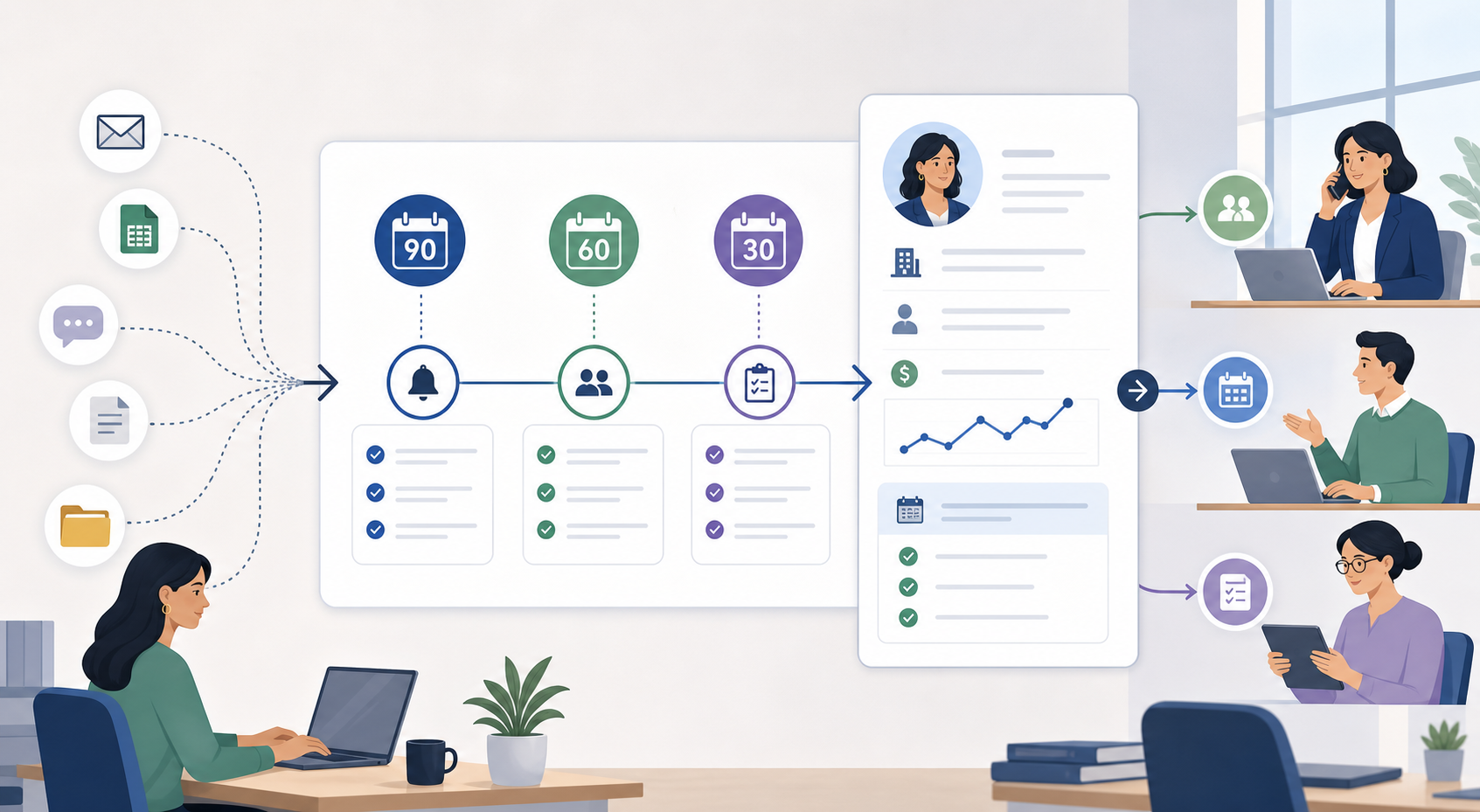
This is the exact gap ClientPoint's renewal tracking and client engagement tools are built to close, turning contract dates into structured 30, 60, and 90-day triggers, and turning scattered client history into one visible record your whole team can act on before a renewal ever becomes a rescue.

Fixing this doesn't require a bigger team. It requires a small set of habits, applied consistently, well before the renewal date arrives.
| 20% | Personalized customer experiences increase retention rates by roughly twenty percent compared to generic, one-size-fits-all outreach. Source: McKinsey & Company |
| 89% vs 33% | Companies with strong, consistent engagement across every touchpoint retain eighty-nine percent of customers, compared to just thirty-three percent for companies with weak engagement. Source: customer engagement benchmarking research |
A few practices consistently separate businesses that retain well from those that don't:
6. Building a System That Catches What Memory Can't
 If you want to see ClientPoint in action for your own business, click here to claim a free demo with one of our experts.
None of this works if it depends on one person remembering to check a spreadsheet. People change roles, take vacations, get busy with the accounts that are shouting the loudest, and the quiet accounts, the ones that are actually most at risk, get the least attention precisely because they aren't causing any noise.
| The clients you lose without a fight are rarely the ones who were always going to leave. They're the ones nobody was assigned to watch. |
The businesses that retain well have stopped relying on any one person's memory and built a system instead: renewal dates that automatically generate outreach tasks, account health that updates on real signals rather than gut feel, and a shared record that shows every team member the same picture of where a client actually stands. That shift, from tribal knowledge to a visible, structured process, is what turns retention from a hope into a habit.
| ☐ | Set 90, 60, and 30-day renewal triggers off the actual contract date for every active account, not a mental estimate. |
| ☐ | Assign a single named owner to every account so renewal risk is never an ambiguous, shared responsibility. |
| ☐ | Track account health continuously using real usage and engagement signals, not a judgment made only near the renewal date. |
| ☐ | Reach out with specifics, referencing the client's actual results, not a generic renewal notice. |
| ☐ | Close the loop on every support issue or complaint, since a resolved problem builds more loyalty than no problem at all. |
| ☐ | Review your at-risk list monthly as a team, not only when a renewal date is already within thirty days. |
👉 Explore more of the solution center and discover how to reduce chaos, boost efficiency, and build trust at every touchpoint.