


Most businesses assume they lose deals on price. The data says otherwise. Here is what is actually costing you contracts and what the best sales teams are doing differently.

Ask any business owner why they lost their last big deal, and most will give you the same answer: price. The prospect went with someone cheaper. The budget wasn't there. They got a lower quote from a competitor.
It is a comfortable explanation. It absolves the proposal, the sales process, and the follow-up. It places the blame squarely on a number and numbers feel objective and unchangeable.
The problem is that the data tells a completely different story.
According to research compiled by HubSpot and cited across multiple 2025–2026 sales performance reports, up to 37% of lost deals happen because buyers don't see product fit and another 35% walk away because they don't see value for money. That is 72% of lost opportunities tied directly to a failure to demonstrate tangible value. Not price. Not budget. Not competition. Failure to show why you are worth what you are asking for.
|
|
72% of lost deals come down to one thing: the buyer couldn't see the value. Not the price. The value. |
This is a fundamentally different problem than the one most businesses think they are solving. If you believe you are losing on price, you cut your rates, offer discounts, and compete on a margin you can barely afford. If you understand that you are actually losing on value communication, the solution looks completely different and far more profitable.
This article is about that distinction. Why buyers cannot see what you are offering, even when it is exceptional. What the research says about what actually moves them to a decision. And what the businesses closing at the highest rates in 2026 are doing that most of their competitors are not.
Let’s take a look at just some of the ways ClientPoint humanizes your digital selling environment and wins you and your team more deals.
Before we talk about solutions, we need to sit with the full picture of the problem. Because the data around B2B deal loss in 2025 and 2026 is not just sobering, it is a roadmap of exactly where things go wrong.
|
40–60% of B2B deals end in no decision at all - not a competitor win Harvard Business Review, 2.5M conversations analyzed |
20–21% average B2B win rate in 2026 - down from 25–30% in prior years HubSpot / Kondo, 2026 |
86% of B2B deals stall at some point before closing Forrester Research, 2025 |
|
10.1 mo average B2B sales cycle length in 2026 Prospeo Sales Benchmarks, 2026 |
79% of B2B purchases require CFO approval TrustRadius B2B Buying Disconnect Report, 2024 |
72% of sellers' time is spent on non-selling tasks SellersCommerce B2B Marketing Report, 2026 |
Read those numbers as a connected story, not individual statistics. The average B2B win rate has dropped to 20–21%, meaning four out of every five deals you work are not converting. Of the ones that do not close, 40–60% end in no decision at all not even a competitor win. The prospect simply stalled, got overwhelmed, and never moved forward.
Meanwhile, your sales team is spending 72% of their time on tasks that have nothing to do with actual selling. 20% of that time goes directly to compiling information for presentations and proposals. And yet the proposals being produced from all that effort are still failing to demonstrate value convincingly enough to move buyers past their hesitation.
|
WHY THIS MATTERS Every deal that ends in "no decision" is not a neutral outcome. It represents the full cost of acquisition - the discovery calls, the proposal time, the follow-ups, the internal review - with zero revenue to show for it. Harvard Business Review estimates the annual cost of no-decision outcomes runs into the trillions across B2B markets globally. |
Here is the uncomfortable truth at the heart of most lost deals: your buyer is not evaluating your proposal the way you wrote it. They are evaluating it the way they experience it and those two things are often very different.
Modern B2B buyers complete an estimated 67–70% of their buying journey independently before ever engaging a sales rep. By the time your proposal lands in their inbox, they have already read your website, compared you to competitors, consumed peer reviews, and in 2026, used AI-powered research tools to build their own shortlist. Forrester's 2025 survey found that 81% of buyers already have a favorite vendor in mind before they contact anyone.
So your proposal is not introducing you. It is either confirming or contradicting the impression they have already formed. And if it reads like every other proposal they have seen generic company overview, list of services, pricing table, call-to-action, it confirms exactly what they feared: that you do not understand their specific situation.
|
|
"In 2026, personalization isn't a tactic - it's the price of admission. Generic value propositions don't just underperform; they actively signal to a buyer that you haven't done the work." - Martal, B2B Buyer Behavior Report, 2026 |
Storydoc's analysis of 1.3 million proposal sessions found that personalization was the single biggest driver of buyer engagement above design, above pricing presentation, above document length. Proposals that included a "What we've heard from you" slide saw a 31% increase in engagement. Yet only 11% of the proposals analyzed included it. That is an enormous, largely unclaimed competitive advantage sitting right in front of most businesses.
The trust deficit making everything harder
There is another layer to this problem that most sales teams underestimate. Gartner's research found that 69% of B2B buyers report inconsistencies between information on a vendor's website and what sellers tell them. That gap - between what buyers read before the call and what they hear during it creates friction that no proposal, however well-written, can fully overcome.
Trust has become the currency of B2B transactions in 2026. Sopro's State of Prospecting report found that even after a strong discovery call, over four-fifths of buyers report feeling let down by their providers citing expectation mismanagement and a failure to provide real, tangible value as the primary causes.
In this environment, the proposal is not just a document. It is a trust signal. It tells the buyer whether you understood what they told you, whether you can communicate clearly and professionally, and whether working with you will feel organized and reliable or chaotic and generic.
|
RESEARCH INSIGHT Copy-paste proposals with only the buyer's name changed in the header win 3× less than genuinely personalized proposals. Buyers spot a template immediately and it signals you don't understand their situation. (Proposify Research, 2.6M proposals analyzed, 2025) |
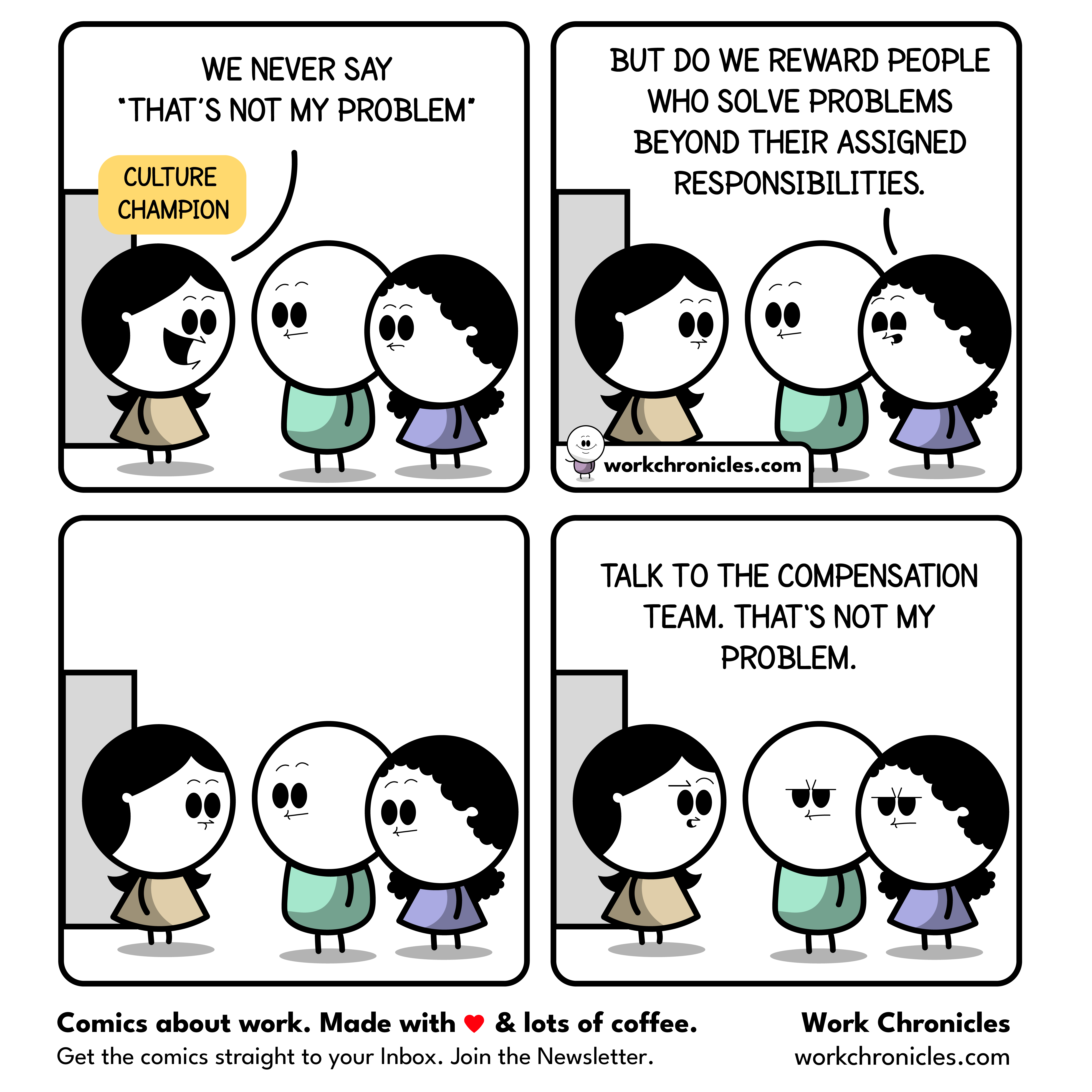 Even when your proposal is excellent, there is a second layer of complexity that kills deals and it has nothing to do with the person you sent it to.
The average B2B purchase in 2026 now involves 10 or more stakeholders across IT, finance, operations, and end users, according to 6Sense's Buyer Experience Report, 2025. For AI-related purchases specifically, Forrester found the buying group roughly doubles to 20 or more participants. And 79% of purchases require CFO approval meaning your proposal needs to make a business case compelling enough to pass financial scrutiny, not just earn the enthusiasm of your champion.
Here is the structural problem: your proposal was built for one person, but it has to travel through a committee. Your champion reads it, loves it, and then tries to explain it to colleagues who have never met you, have no context for your conversation, and are evaluating purely on what they can see on the page.
|
|
"Deals stall when buyers can't build internal consensus or defend the investment. The value story doesn't travel: champions can't repeat it, Finance can't validate it, and stakeholders aren't aligned on the problem." - ValuePros, B2B Stats 2026 |
Forrester's 2025 research found that 86% of B2B purchases stall at some point during the process often because a single stakeholder's concerns went unaddressed early in the evaluation. Buying cycles for complex solutions now average 11 to 12 months, and each stall point compounds the cost of the sale.
What this means practically for your proposal strategy is significant. A proposal that cannot be easily shared, navigated independently, and understood without context is a proposal that dies somewhere in the committee review. A PDF attachment that requires downloading, cannot be tracked, and looks identical to the last three proposals the stakeholder received is not a business development asset. It is a liability.
The 13-stakeholder reality
Forrester's full 2025 survey data put the average B2B purchase at 13 internal stakeholders and 9 external participants. Think about what that means for a typical proposal. You send a 20-page PDF to your main contact. That person shares it or tries to with a dozen colleagues. Some cannot open the file. Some are on mobile. Some forward it in an email chain where it gets buried under three other attachments. The version your finance team reviews may be different from the one your IT team saw.
The businesses winning at this committee stage are not necessarily the ones with the most compelling offer. They are the ones whose proposal is easiest to share, easiest to navigate, and easiest to champion internally. The ones that give every stakeholder exactly what they need without requiring your direct involvement at every step.

Given everything we now know about how buyers evaluate proposals, what does a genuinely effective one actually contain? The research is surprisingly specific.
It opens with their world, not yours
Storydoc's analysis found that the first three slides of a proposal carry a disproportionate share of the engagement weight. Buyers decide whether to continue reading based almost entirely on whether the opening feels relevant to them. Proposals that open with a company overview, a list of services, or a generic "about us" section lose the reader before the value case has been made.
The proposals with the highest engagement rates open with a reflection of the buyer's specific situation their stated goals, the challenges they described during discovery, the outcome they are trying to achieve. Before you tell them what you do, you show them that you heard what they said.
It leads with outcomes, not features
SellersCommerce's 2026 B2B Marketing Statistics report found that the most influential types of content for B2B buyers address value demonstration (49%) and problem-solving guides (48%) significantly more than product specifications (67% in terms of what buyers seek, but 49% in terms of what actually influences decisions). The distinction is critical: buyers look for specs to qualify you, but they are influenced by value stories that show what working with you actually produces.
A proposal that lists your capabilities is doing the minimum. A proposal that shows what those capabilities have produced for businesses like theirs with specific outcomes, measurable results, and named case studies is doing what the 45% average RFP win rate benchmark suggests the best performers are doing differently.
It makes the business case for the CFO
With 79% of purchases requiring CFO approval, the proposals that advance past the committee stage are the ones that include a defensible financial justification not just a compelling demo. Gartner's survey found that 93% of buyers insist on a business case for all technology investments. The proposals that provide that case internally ROI projections, cost-benefit analysis, risk reduction quantification give the champion the tool they need to advocate effectively upward.
|
KEY FINDING Winning proposal teams spend an average of 35 hours per submission versus the 33-hour industry average prioritizing substance, personalization, and polish over pure speed. That extra two hours is the differentiator in competitive bids. (Loopio RFP Trends Report, 2026) |
It is built to travel
The most overlooked dimension of proposal design in 2026 is shareability. A proposal that looks professionally designed, is accessible via a single shareable link, loads perfectly on any device, and allows any stakeholder to navigate independently without requiring context from the original sales conversation that is a proposal built for how buying committees actually work today.
Buyers are spending 70% of their journey self-directing, and up to 4,000 vendor touchpoints are generated per purchase according to research cited in Prospeo's 2026 buying behavior analysis. Your proposal needs to be one of those touchpoints that works for the buyer, not one that creates friction.
6. What the Best Sales Teams Are Doing Differently in 2026

The businesses with the highest proposal win rates in 2026 share a handful of specific practices that separate them from the majority still losing on "price." What is striking about this research is how consistent and accessible these practices are they do not require a bigger team, a larger budget, or a complete sales process overhaul. They require a deliberate shift in how proposals are built and how follow-up is managed.
They qualify before they create
Flowcase's 2025 Professional Services Bid Management Report found that firms that qualify opportunities more rigorously tend to win more often. The logic is straightforward: a personalized, substantive proposal takes 35+ hours to produce well. Spending that time on opportunities with low probability of fit is a guaranteed way to reduce your win rate, not improve it. The best teams are more selective about which opportunities receive a full proposal effort and more thorough when they commit to one.
They personalize deeply, not superficially
CalcStack's analysis of Proposify's 2.6 million proposal dataset confirmed what Storydoc's research showed: copy-paste proposals with the buyer's name changed win three times less than genuinely personalized ones. Deep personalization means referencing specific pain points from discovery conversations, showing outcomes that are relevant to the prospect's industry and scale, and building the business case around their stated success criteria not a template of what success typically looks like.
They build proposals for committees, not contacts
The winning proposals are designed for the 13-stakeholder buying committee, not just the champion who requested them. That means accessible formatting, clear executive summaries, self-contained business cases, and digital formats that can be navigated independently without context from the original sales conversation.
They follow up with data, not guesswork
87% of sales organizations now use some form of AI in their process according to Prospeo's 2026 benchmarks but the ones seeing the highest returns are using it strategically for high-value use cases: proposal creation, follow-up personalization, and engagement tracking. Knowing when a buyer has opened a proposal and which sections they spent the most time on transforms follow-up from a scheduling exercise into a precision activity.
|
THE COMPOUNDING ADVANTAGE Proposify research across 2.6 million proposals shows top performers achieve 50%+ win rates versus the 25% average through better qualification, personalization, and disciplined follow-up. Over 90 days, one company tracked in CalcStack's analysis improved its win rate from 15% to 35% translating to $864,000 in additional annual revenue without generating a single additional lead. |
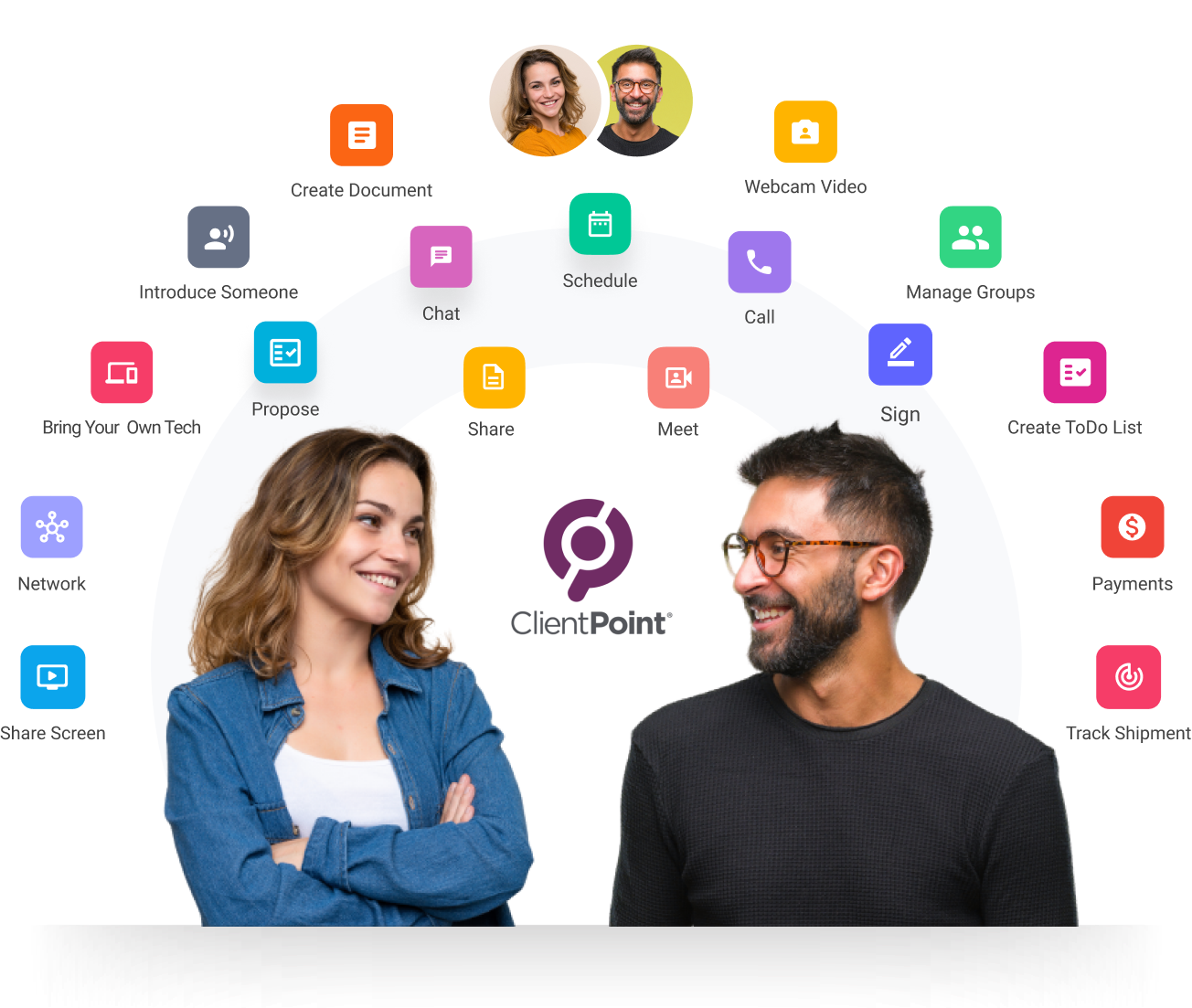
Everything the research points to personalization at scale, committee-ready shareability, engagement-triggered follow-up, business case clarityrequires an infrastructure that most businesses do not have when they are building proposals in Word documents and sending PDF attachments via email.
ClientPoint is built specifically for this problem. Not as a document creator, but as a client experience platform that transforms the proposal from a static deliverable into a live, trackable, shareable business development asset.
MEG AI Pro - personalization at the speed your pipeline requires
ClientPoint's AI Pro Assistant, MEG, addresses the single most time-consuming element of a high-quality proposal: the personalization. MEG drafts tailored proposals in minutes, trained on your business voice, your clients' context, and your specific goals. The output is not a template with the buyer's name inserted. It is a genuinely personalized document built around what you know about that specific prospect delivered fast enough to be the first response in the market.
Shareable links built for buying committees
ClientPoint proposals are shared via a single, trackable link accessible on any device, by any stakeholder, without requiring a download or a specific application. When your champion forwards your proposal to the CFO, the operations director, and the IT lead, every one of them accesses the same version, in the same professional format, with the same clarity and brand consistency you designed for.
Engagement analytics that tell you when to follow up
ClientPoint's engagement analytics show you the moment a recipient opens your proposal, which sections they viewed, how long they spent on each one, and whether they have shared it internally. When a prospect spends eleven minutes on your pricing section, that is not information you should be without. It is your follow-up trigger and it turns a generic check-in into a precisely timed, contextually relevant conversation.
ClientPoint Sign removing the final friction point
With 86% of deals stalling at some point in the buying process, the closing experience matters as much as the opening one. ClientPoint Sign gives buyers a frictionless path from proposal to signed agreement drag-and-drop signature fields, smart routing to the right stakeholders in the right order, and legally binding eSignature that requires no PDF downloads, no printing, and no separate system to navigate.
|
|
The businesses winning in 2026 are not the ones competing on price. They are the ones making their value so clear, so personalized, and so easy to champion internally that price becomes a secondary consideration. |
If 72% of your lost deals are coming down to a failure to demonstrate value and the research is consistent that they are the most impactful investment you can make is not in lowering your price. It is in raising the quality, personalization, and professionalism of the proposal experience you deliver.
That is exactly what ClientPoint is built to help you do across every industry, every deal size, and every stage of the buyer journey.
|
See how ClientPoint transforms your proposal into a business development asset that closes. |
👉 Explore more of the solution center and discover how to reduce chaos, boost efficiency, and build trust at every touchpoint.