


The number you'll report next December is already being decided by the systems you build, or skip, this quarter.
|
IN THIS ARTICLE |
Every revenue leader eventually says some version of the same sentence in December: "we need to hit the ground running in Q1." It's said with good intentions and almost never with a plan behind it, because by the time it's said, the ground has already been decided. The pipeline that will convert in March was built in October. The renewal that will expand in June was seeded by an onboarding experience from a year earlier. The deal that closes in Q1 2027 didn't start when the calendar flipped. It started with a decision someone made, or didn't make, right now.
That's the uncomfortable premise of this article: 2027 is not a future problem. It's a present one wearing a future date.
Let’s take a look at just some of the ways ClientPoint humanizes your digital selling environment and wins you and your team more deals. If you'd like to learn more about how ClientPoint can help you communicate to your clients and team, click here to book a demo with one of our experts.
 If you'd like to learn more about how ClientPoint can improve your meeting setup, click here to claim a free demo with one of our experts.
Start with the simplest possible model of a revenue org: pipeline in, pipeline out. Whatever coverage sits in your funnel today roughly determines what closes one to two quarters from now. That lag is the whole story. It's why a revenue goal for next year is really a statement about what has to be true in your pipeline well before the year begins.
Three benchmarks make the lag concrete.
Coverage. The median B2B team in 2026 carries about 3.2x pipeline coverage against quota (Digital Applied, 2026 Demand Generation Benchmark). Coverage below 2.5x is treated as an early warning sign, not just a soft quarter. In plain terms, if your 2027 quota is $1M, you'd want roughly $3.2M in qualified pipeline working toward it, and most of that has to come from deals being opened now.
Cycle length. The typical B2B sales cycle runs three to six months (Salesmotion, 2026 Sales Pipeline Metrics Report). A deal opened in October is, on average, still in progress in January or later. It's a 2027 deal that happens to start in 2026.
Conversion. The median lead-to-qualified-opportunity conversion rate sits at 10–15% (Landbase, 2026 Sales Pipeline Statistics). That means it takes roughly seven to ten leads to produce one real opportunity. A plan that assumes better conversion than this, without changing anything about the process, is a plan built on hope.
None of this is exotic. Every sales leader who has carried a quota knows the pipeline math by instinct. What's harder to sit with is the implication. If a deal needs three to six months to close, and Q1 2027 depends on deals that are mid-cycle today, then the work that produces a strong 2027 isn't a 2027 activity at all. It's already underway, or it isn't happening.
The teams that consistently make their number aren't the ones with the best January. They're the ones who stopped treating pipeline generation as a task and started treating it as infrastructure that runs continuously, no matter which page the calendar is on.
 If you'd like to learn more about ClientPoint's documentation automation, or content & project management, don't hesitate to book a free demo with one of our experts.
If you want proof that revenue teams are taking this lag seriously, look at where the money is going. Companies aren't waiting for a slow quarter to react anymore. They're moving spend toward pipeline-building as a standing priority, not a fire drill.
According to Pipeline360 research, 68% of total go-to-market budget is now allocated specifically to pipeline-generating activity, up from 41% just a few years earlier (Pipeline360, cited in OneAway's 2026 B2B Pipeline Generation report). Brand and awareness get the remainder, and often only after pipeline targets are already being met.
That's a structural change, not a seasonal one. It reflects a shift in accountability across the whole revenue team:
For a revenue leader mapping out 2027, this reframes the planning calendar entirely. The plan can't start when the fiscal year starts. It has to start when the pipeline that will fund that year starts forming. For most B2B sales cycles, that's right now.
| A revenue target isn't a forecast. It's a description of a system that either exists yet, or doesn't. |
3. The Buyer Journey You Can't See, And Aren't Equipped For
Here's the part of the "set it up now" argument that's easy to miss. It isn't only about how much pipeline you build. It's about whether what you've built can actually reach a buyer who no longer moves the way most sales processes assume.
Today's B2B buyer does most of the work alone. Roughly 80% of the B2B buying journey now happens without direct contact with a vendor's sales team, and buyers spend only about 17% of their total purchase time meeting with the suppliers they're considering (Gartner B2B Buying Survey, 2024, cited by Brixon Group, 2026). And that 17% is split across every vendor on their shortlist, not just yours.
Those buyers also aren't deciding alone. A considered B2B purchase typically involves a buying committee of six to ten stakeholders, each arriving with their own independently gathered information before a rep is ever looped in (Gartner, 2024 B2B Buying Survey). Finance, IT, operations and the end users all bring different questions, and most of them will never get on a call with you.
The result is a lot of friction. Forrester found that 86% of B2B purchases stall at some point during the buying process, and 81% of buyers report dissatisfaction with the vendor they ultimately chose, even after the deal closes (Forrester, The State of Business Buying, 2024).
Put those numbers together and the picture is unflattering:
That's not a lead-generation problem. It's an infrastructure problem. When six to ten people are doing their own research and comparing notes without a rep present, the only thing shaping their decision is the content, proposals and self-serve material your company has already built and put in front of them.
This is exactly why "we'll build better sales enablement next year" arrives too late. The buyer evaluating you for a 2027 deal is very likely forming an opinion right now, based on whatever exists today. A digital sales room, a well-structured proposal, and content that answers committee level questions without a live rep aren't nice to haves for a future initiative. They're the assets doing the actual selling during the 80% of the journey nobody on your team is watching.

If you'd like to learn more about how ClientPoint can improve your meeting setup, click here to claim a free demo with one of our experts.
4. Renewals are 2027 Revenue Too
 If you're ready to see ClientPoint in action, claiming a free demo with one of our experts only takes a minute.
New pipeline gets most of the attention in any conversation about future revenue. But your existing book of business is doing at least as much work, often more quietly. A renewal that lands in March 2027 is being shaped by how that account is managed in the second half of 2026. Rate conversations, expansion opportunities and even basic retention are set in motion long before the contract end date, not the week it arrives.
It's the same lag principle as new pipeline, just less visible, because renewals don't show up on a pipeline report the way new opportunities do. Consider an account that:
That account won't turn into an on-time, full-value renewal just because the date arrives. The groundwork has to be running before the renewal window opens: tracked trigger points at 90, 60 and 30 days out, proactive communication about any rate changes, and a clear record of the value the client has received over the year.
Organizations that treat renewal as a single email sent a week before expiration are, in effect, leaving part of their 2027 number unmanaged. The ones building a tracked, staged renewal motion now will be able to point to a number they actually influenced, rather than one they hoped would hold.
This is where the same tools that win a deal can help keep it. A ClientPoint room can hold an account's contract, onboarding materials and renewal proposal in one place, so the client already sees the value they've received by the time the 90-day mark arrives.
 If you'd like to learn more about how ClientPoint can improve your meeting setup, click here to claim a free demo with one of our experts.
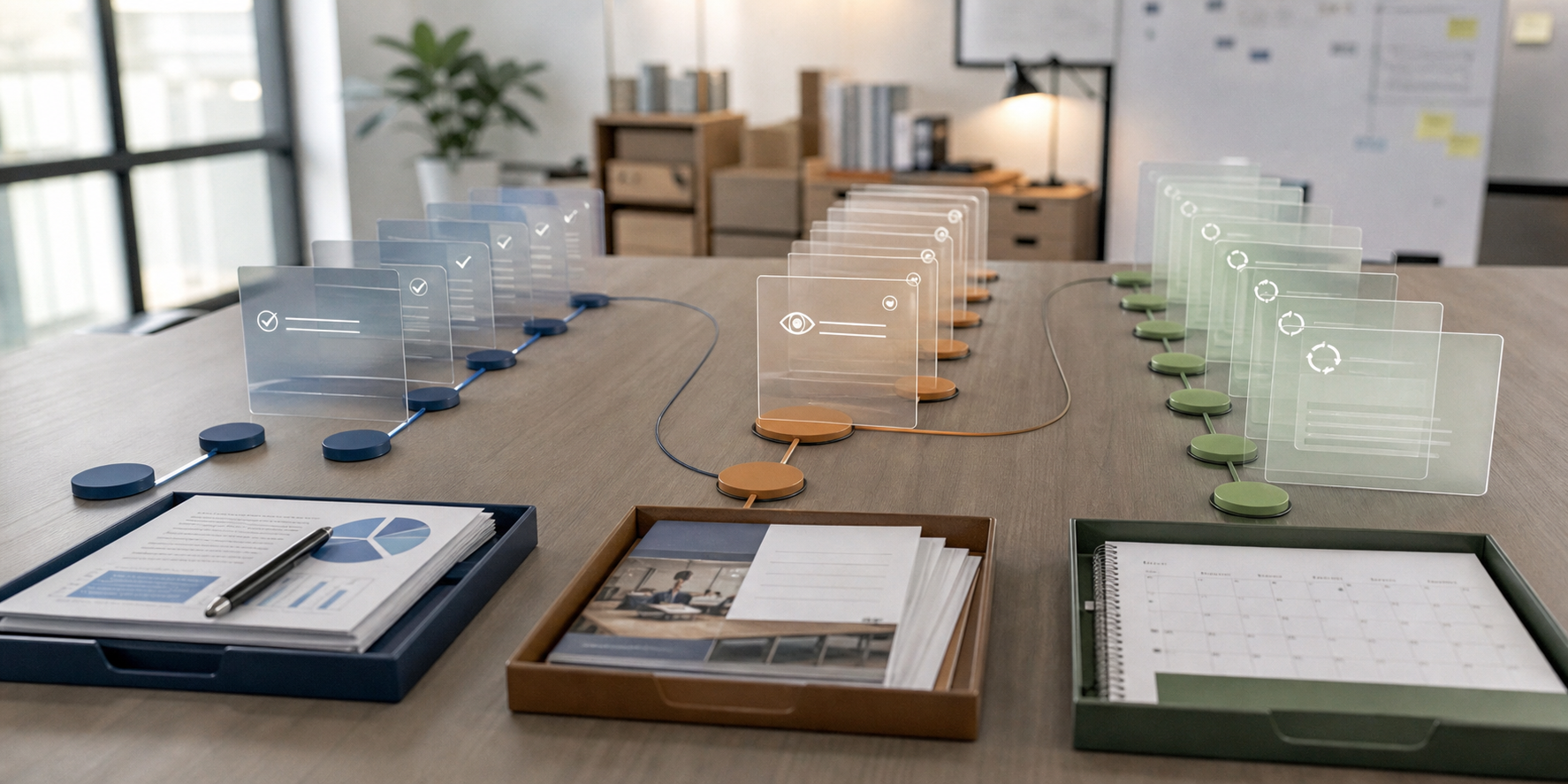
The common thread across pipeline, buyer visibility and renewals is that each one behaves like a system with memory. Build it once, refine it, and it keeps paying off:
Now compare that with the alternative: a revenue motion that resets every quarter. A fresh scramble for pipeline. A proposal pieced together from an old template someone dug up. A renewal caught late because no one was watching the calendar. That model can hit a number occasionally. It can't compound one, and that's the real difference between a company that has a good year and a company that has several good years in a row.
So the question that matters for anyone setting a 2027 target isn't "Are we working hard enough?" It's "Will what we're building today still be doing work for us in six months, without anyone actively pushing it?" Coverage models, real visibility into where every deal stands, and a documented renewal cadence all pass that test. A single heroic push in Q4 2026 does not.
That's the thinking behind ClientPoint's proposal templates and content library: every new proposal starts from your best work, and engagement tracking shows which deals in your pipeline are actually active, so the system gets sharper with every deal instead of resetting.
The Bottom LineA 2027 revenue goal is really a description of three things:
None of those can be assembled in January. They're either already in motion, or the goal is aspirational rather than achievable. The work that decides next year's number is due this year. |
6. What to Build This Quarter
 If this sounds like something your team could use, claim a free demo here and we'll show you how it works.
None of this requires a company-wide overhaul. It requires picking a handful of things that compound and starting them now, deliberately, instead of waiting for a planning cycle to make it official.
| ✔️ |
Audit your pipeline coverage against next year's target. If it's meaningfully below roughly 3x (the 2026 median is 3.2x, per Digital Applied), that gap needs a plan now, not a Q1 conversation. |
| ✔️ |
Build or refresh one self-serve asset. A digital sales room, proposal template or content hub that can answer a buying committee's questions without a rep in the room |
| ✔️ |
Put renewal trigger dates on a tracked calendar. Set 90-, 60- and 30-day touchpoints for every account, rather than relying on someone to remember. |
| ✔️ |
Turn one manual process into a system. Pick one one-off task from this year, such as a proposal, a follow-up sequence or a reporting step, and rebuild it as something repeatable before the quarter ends. |
|
Where ClientPoint fits A ClientPoint Digital Sales Room gives every stakeholder on the buying committee, not just the one person your rep happens to talk to, a single, branded, always current place to review pricing, proposals, videos and supporting content on their own time. Your team sees who opened what, how long they spent on it, and when a deal goes quiet, so you can step in before it stalls instead of finding out after. |
The companies reporting a strong 2027 next December won't have done anything mysterious. They'll simply have treated this quarter as the start of that number, instead of the quiet gap before the real planning begins.
Ready to see how you can streamline your proposals, enhance client engagement, and close more deals this Q3? Schedule a personalized demo today and discover the future of winning proposals.
👉 Explore more of the solution center and discover how to reduce chaos, boost efficiency, and build trust at every touchpoint.