


In this article:
Somewhere right now, a business owner is celebrating. They just closed a big client, months of pitching, refining the proposal, nervous follow-ups, and finally, a signed contract. Champagne, or at least a satisfied exhale. And then, six months later, that same client quietly disappears. No angry email. No dramatic exit. Just silence, and a gap where recurring revenue used to be.
If you've been in business for more than a year, you know this feeling. It's one of the most quietly painful experiences in entrepreneurship, and one of the most preventable.
The real question isn't how to win more clients. The question is: why do the ones you've already won leave?
This article is about that question — and more importantly, about what the businesses that get it right are doing differently. By the end of it, you'll have a clear, actionable framework for transforming transactional client relationships into genuine long-term partnerships that compound in value over time. If you haven't checked out our free relationship space, Register now to claim your free link.
Read those numbers again. A 5% improvement in retention can boost profits by up to 95%. That's not a typo. That's the math of compounding loyalty - and most businesses are completely ignoring it.
Here's the tragic irony: 44% of businesses prioritize customer acquisition, while only 18% prioritize customer retention. They spend the most on the most expensive strategy, and neglect the most profitable one.
"U.S. businesses lose an estimated $1.6 trillion annually due to customer churn — and 85% of that churn is entirely preventable."
Think about what that means for your business. The clients you've worked so hard to win, the relationships you've built, the trust you've earned — all of it can evaporate if you don't actively work to keep it. And the cost isn't just that lost contract. It's the cost of going back out to find someone new, re-educating them about who you are, rebuilding trust from zero, and starting the whole expensive cycle over again.
This is the most expensive mistake in business, and the good news is: it's fixable.
Why One-Time Clients Happen (And How to Prevent It)
Schedule a Demo now to learn how ClientPoint can help you create templates for faster, easier proposals.
Before we talk about solutions, we need to be honest about causes. Clients don't usually leave because your product or service is terrible. They leave for far quieter reasons.
The 5 Silent Killers
Research shows that 33% of customers will consider switching after just one instance of poor service. You don't have the luxury of assuming clients are staying because they haven't complained. Silence isn't loyalty. It's just quiet evaluation.
If you'd like to learn more about how ClientPoint can help you organize your content library, click here to book a demo with one of our experts.
Stop thinking of clients as people who hire you to complete projects. Start thinking of yourself as a stakeholder in their success.
Vendor mentality - "Project delivered on time. Invoice sent. On to the next one."
Partner mentality - "Here's what the data shows, here's what I'd adjust, and here's what I think we should tackle next quarter based on where you're heading."
The vendor closes the loop. The partner keeps it open. Clients who feel like they have a true partner don't shop around — because replacing a partner is far harder than replacing a vendor.
"Loyal customers are 5× more likely to repurchase, 4× more likely to refer others, and 7× more likely to try your new offerings."
One of the biggest barriers to consistent follow-up is the sheer organizational effort it requires. It is hard to be a "partner" when your proposals, contracts, and follow-ups are scattered across five different apps.
ClientPoint makes this effortless by giving you a centralized, professional space to manage proposals, share documents, and maintain polished, personalized communication at every client touchpoint. We automate the busywork so you can focus on relationship-building.
Poor follow-up looks like a generic "Just checking in!" three months after a project ends. That tells your client you only remembered them when you needed new work.
Effective follow-up is structured and value-forward. A simple framework: a Week 1 outcome check-in ("How did that land?"), a Month 1 value summary framed around their goals, a Month 3 forward conversation where you listen more than you talk, and a Month 6 partnership review — a structured conversation about the relationship that naturally evolves into what comes next, without you ever needing to formally pitch.
The Rule of Thumb
Every touchpoint should make the client feel that the interaction is genuinely about them — not about your pipeline. That single distinction separates the businesses clients stay with from the ones they quietly leave.

If you'd like to learn more about ClientPoint's documentation automation, or content & project management, don't hesitate to book a free demo with one of our experts.
In today’s competitive business landscape, efficiency and consistency are critical for sales and marketing success. Yet, many organizations struggle with fragmented communication, outdated materials, and lack of alignment between teams. The solution? A centralized content management system that serves as a single source of truth for all sales and marketing assets.
A unified content hub eliminates the frustration of disorganized files, version control issues, and inconsistent messaging, ensuring that both teams work collaboratively rather than in silos. By implementing a structured content library, businesses can increase productivity, improve client engagement, and enhance overall sales performance.
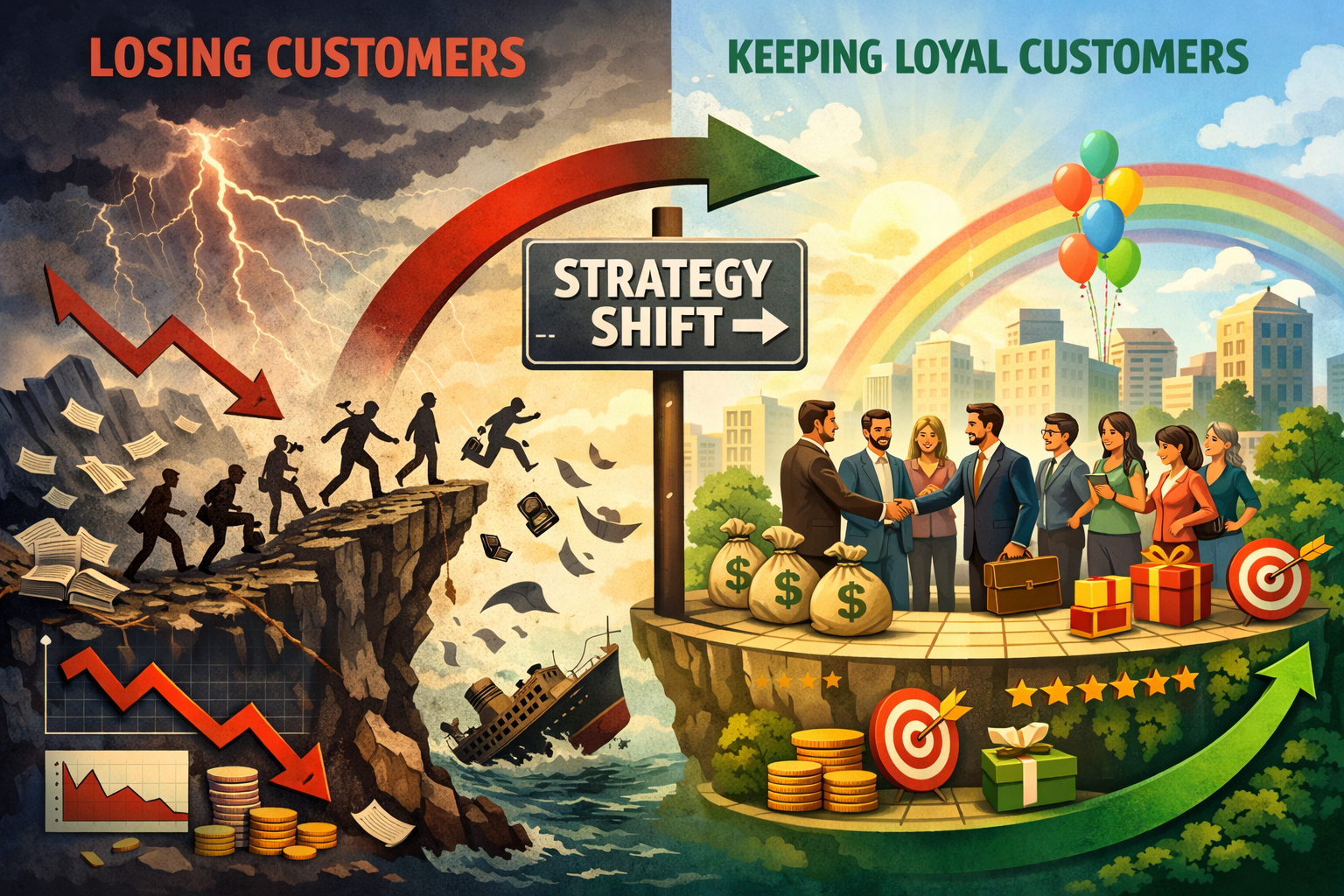
When you shift from transactional to partnership, something remarkable happens. Your business becomes stickier in the most honest way possible — clients stay because leaving would mean losing something genuinely valuable. Not because of lock-in. Because of depth.
Repeat customers spend an average of 67% more than new customers. They require less sales effort. They forgive mistakes more readily. And when they refer a peer, that person arrives already warm, already trusting, predisposed to the same loyalty.
"The companies thriving today are not necessarily the biggest. They are the ones who listen closely, adapt quickly, and make every interaction feel thoughtful and human."
The pitch gets you in the door. Partnership keeps it open. And open doors, compounded over time, are worth far more than any single sale you'll ever close.

If you'd like to learn more about ClientPoint's documentation automation, or content & project management, don't hesitate to book a free demo with one of our experts.
In today’s fast-paced and highly competitive business environment, the relationship between sales and marketing has never been more crucial.